Launch offer — valid today only

📄 Digital book in PDF · read it on your phone or print it

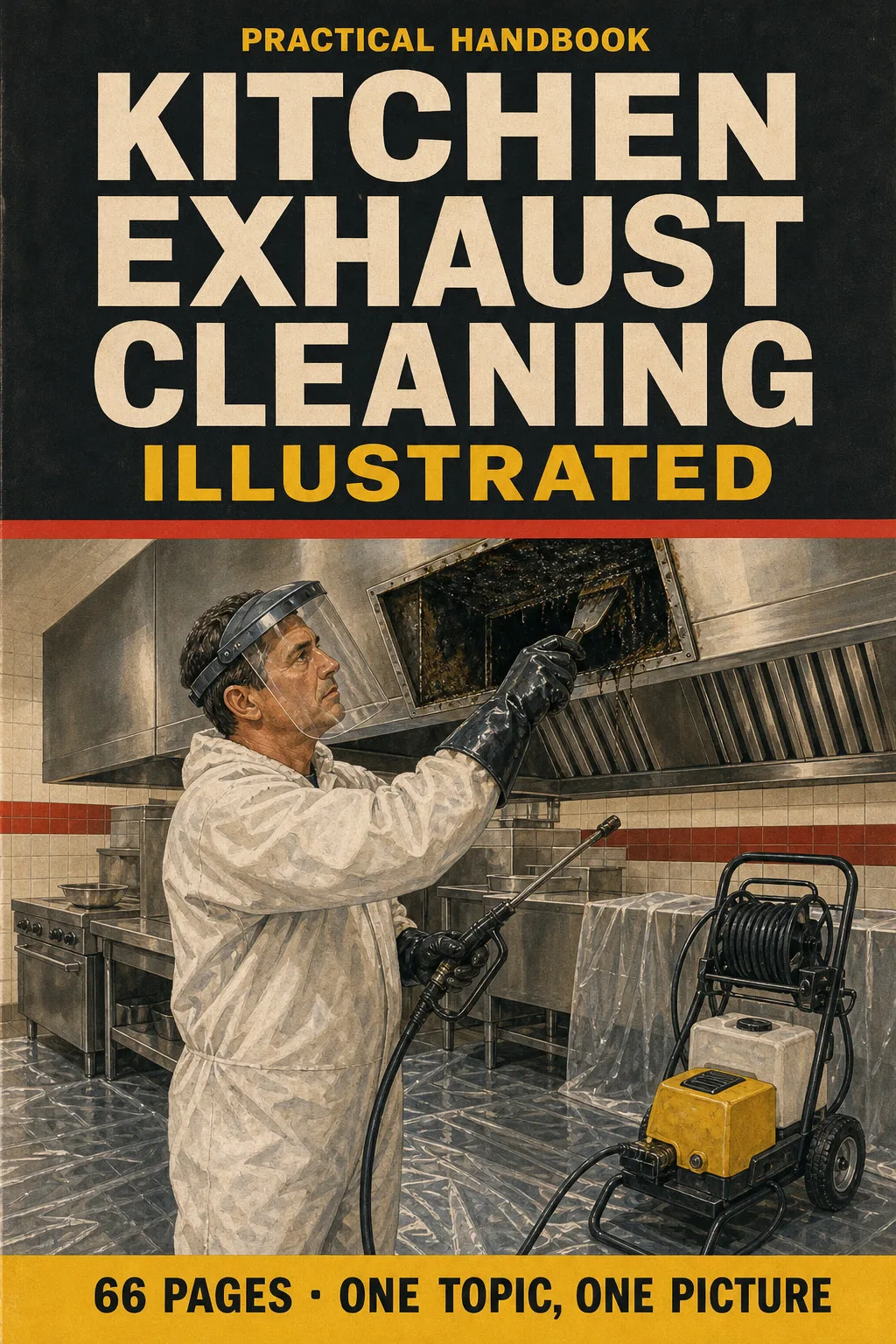
Kitchen Exhaust Cleaning and NFPA 96 in Drawings From Hood to Roof Fan, Page by Page

Hoods and baffle filters, the grease duct, the upblast fan, the inspection schedule, lockout/tagout, the depth gauge comb, the service sticker and the fire marshal's questions. Every topic gets its own page: first the drawing, then what you need to remember. 66 illustrated pages.

START STUDYING THIS WAY

🔒 Secure checkout · PDF by email · 30-day guarantee

Every topic, its own pageEach part of the system drawn, with the explanation right beside it
66 illustrated pages66 illustrated pages in 8 parts, hood to roof fan
Up-to-date sourcesChecked against NFPA 96 (2024), ANSI/IKECA C10 and OSHA 29 CFR 1910 · Independent study guide
PDF by emailFormat

Look Inside the Book

Every page has one big drawing and a box with the numbers and steps you need to know:

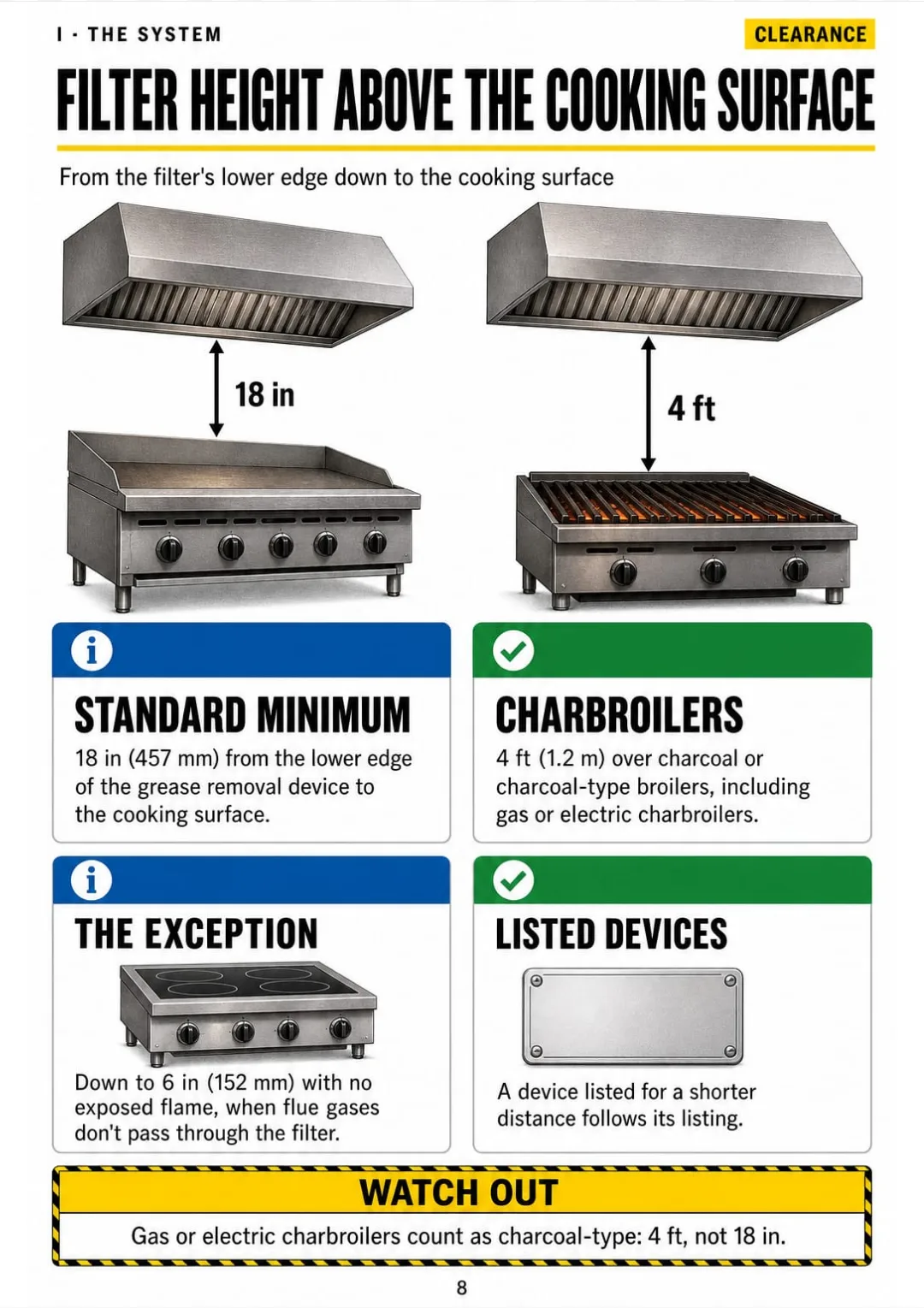
Filter to cooking surface: 18 in minimum, 4 ft over charbroilers, 6 in only in the no-flame exception.
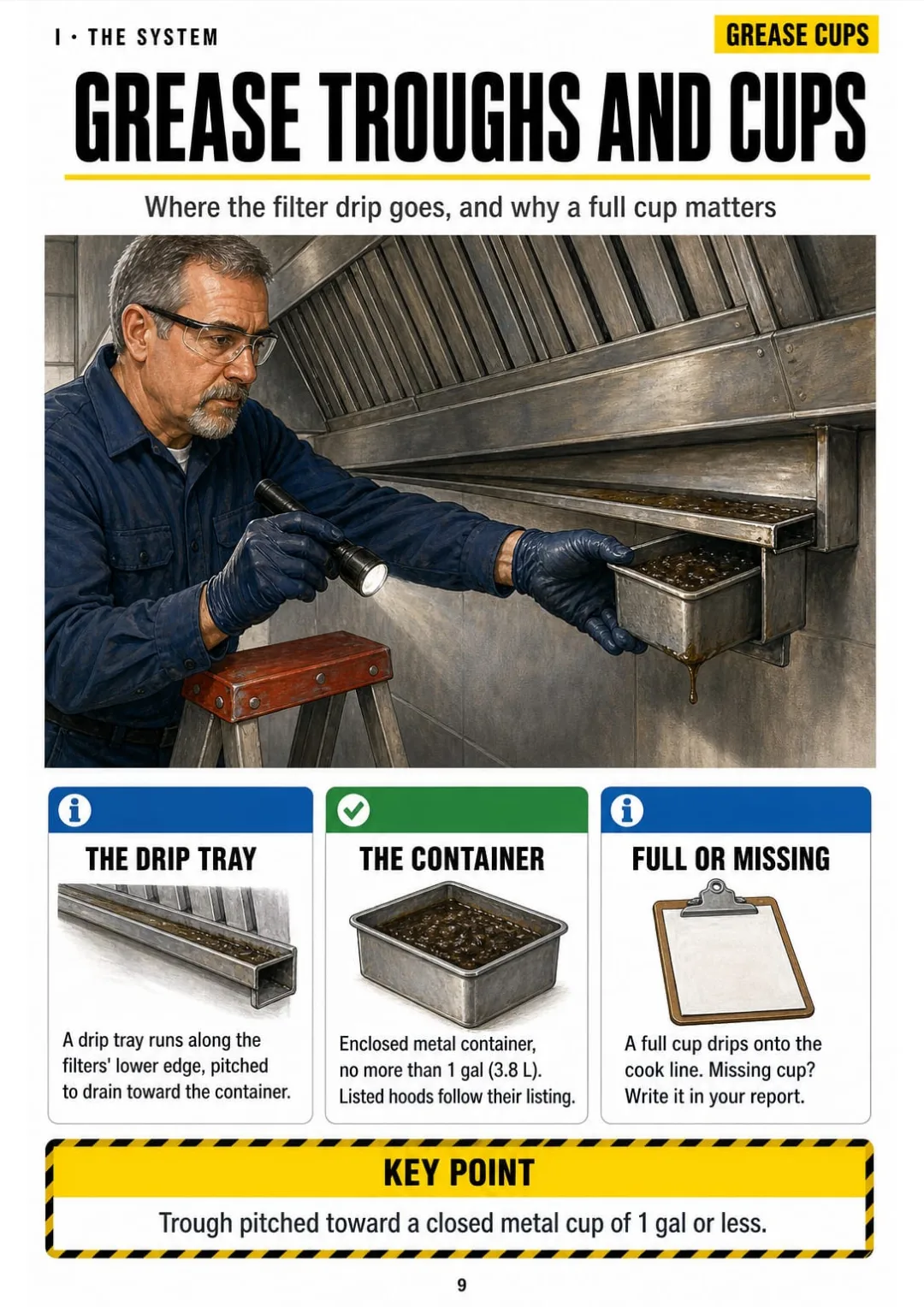
Drip tray under the filters drains to an enclosed metal container of 1 gal (3.8 L) or less.
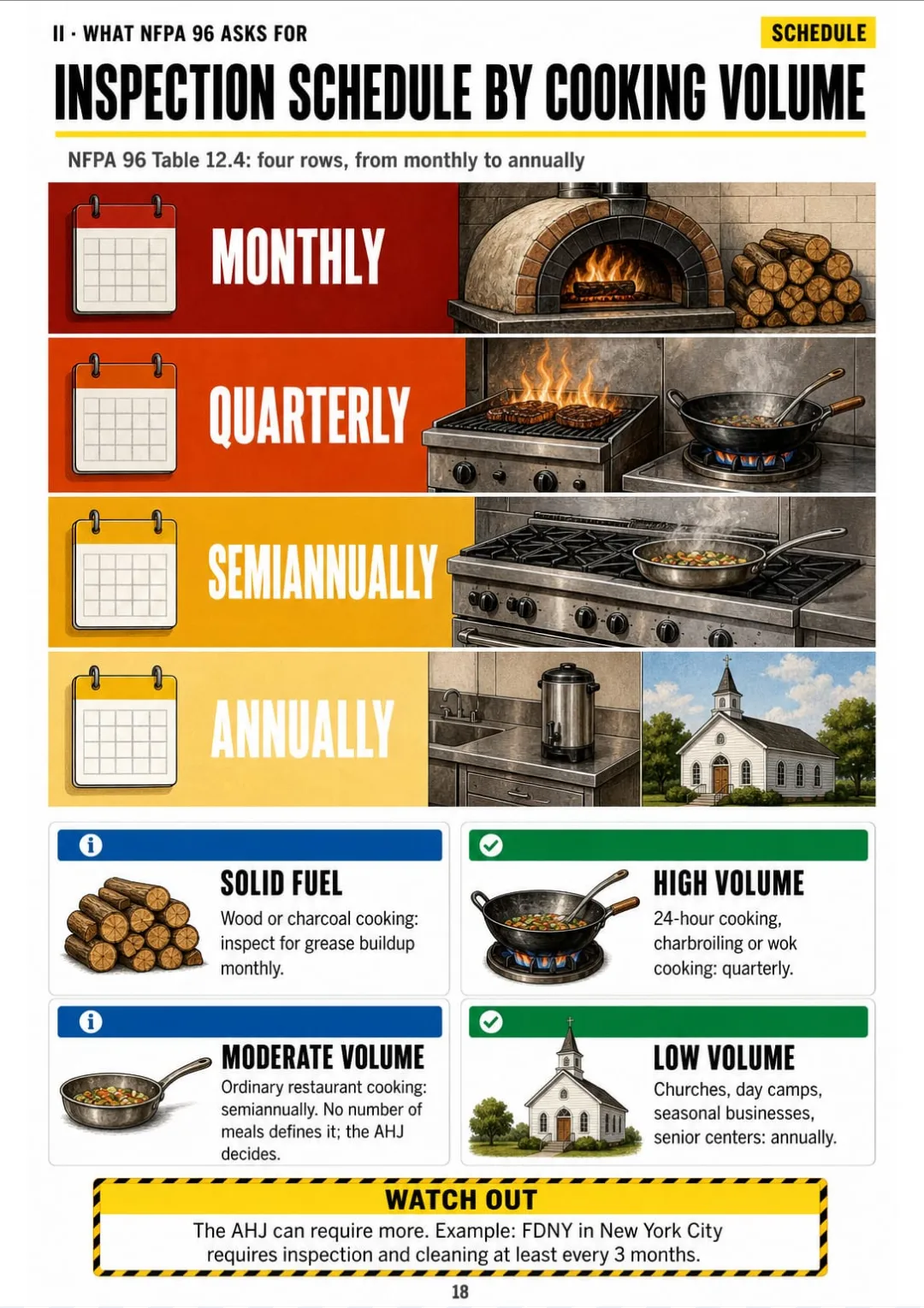
Solid fuel monthly · high volume quarterly · moderate semiannually · low annually (NFPA 96-2024, Table 12.4).
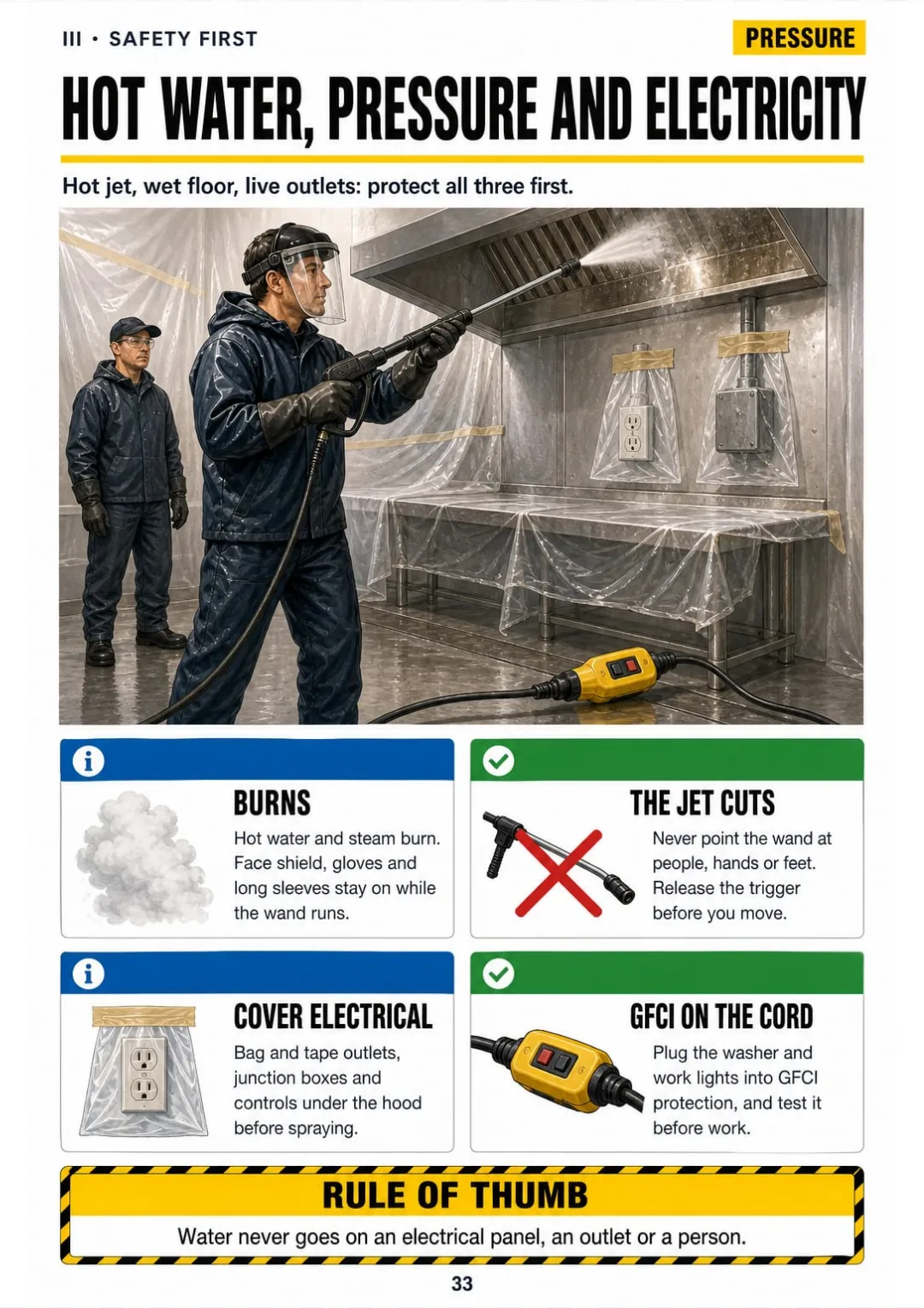
Hot-water pressure washing: burns, jet cuts and live outlets, with protection for each.
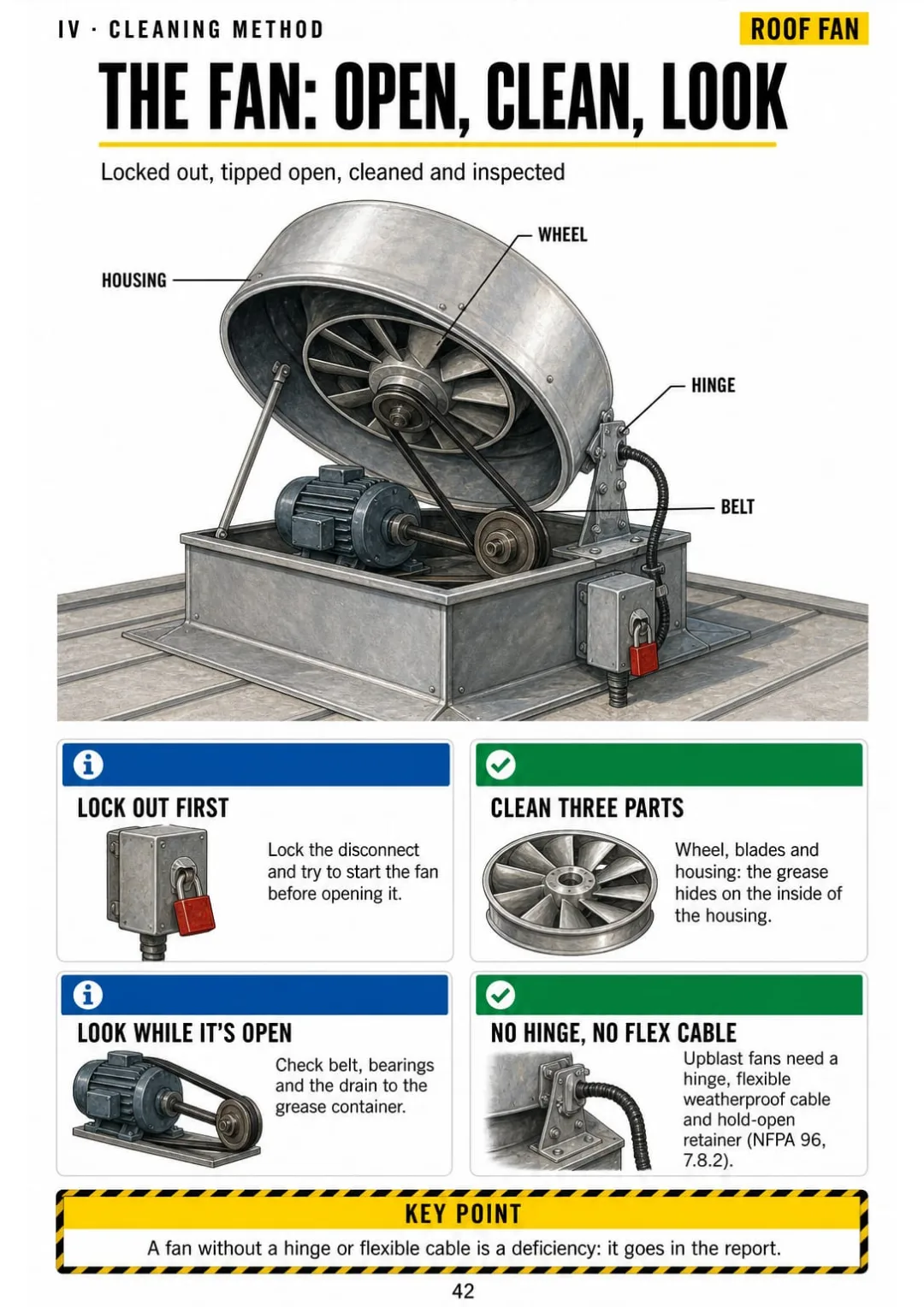
Upblast fan: hinge, flexible cable and retainer; clean wheel and housing, check belt and drain.
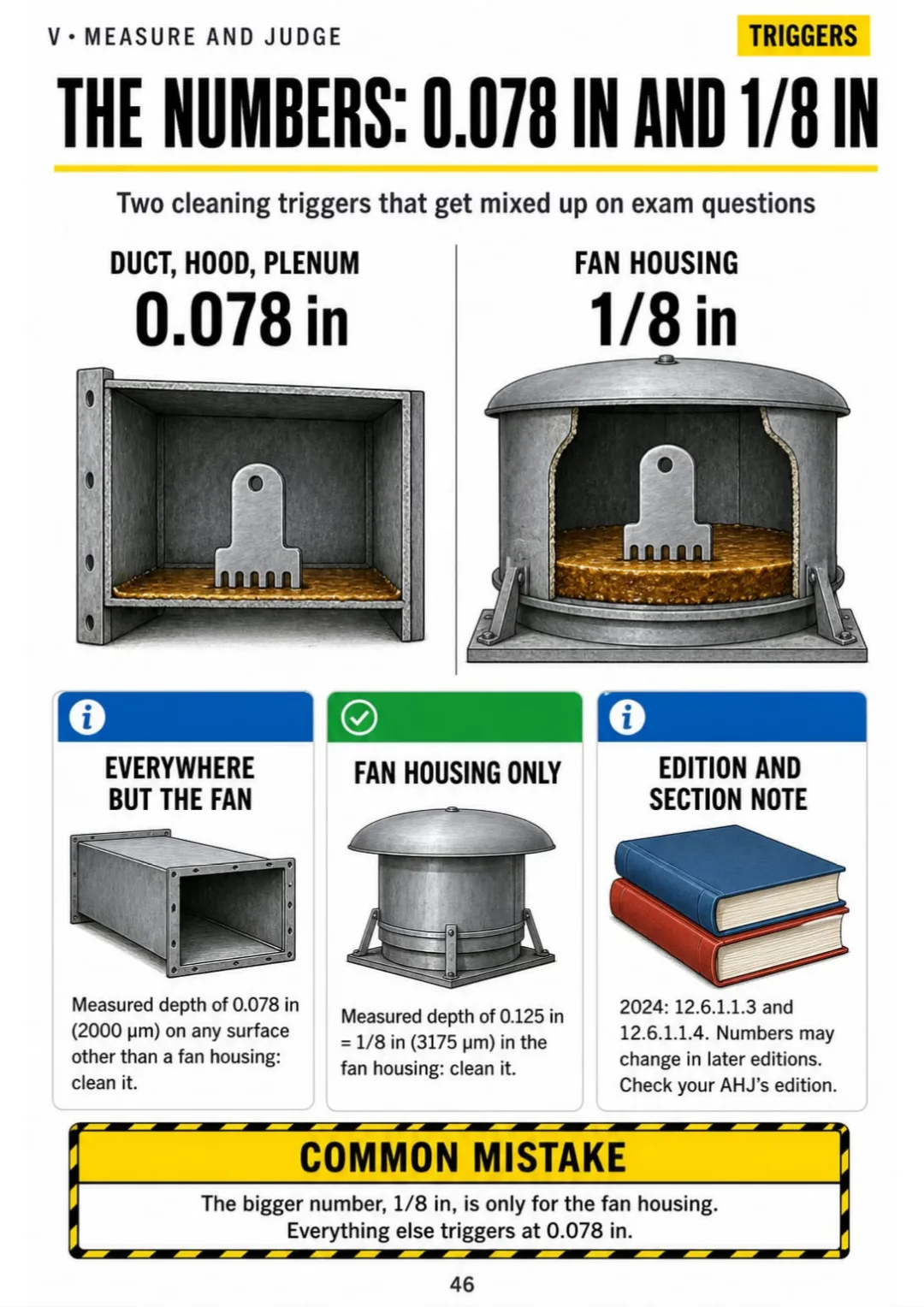
NFPA 96: clean at 0.078 in (2000 µm) of grease, or 1/8 in (3175 µm) in the fan housing
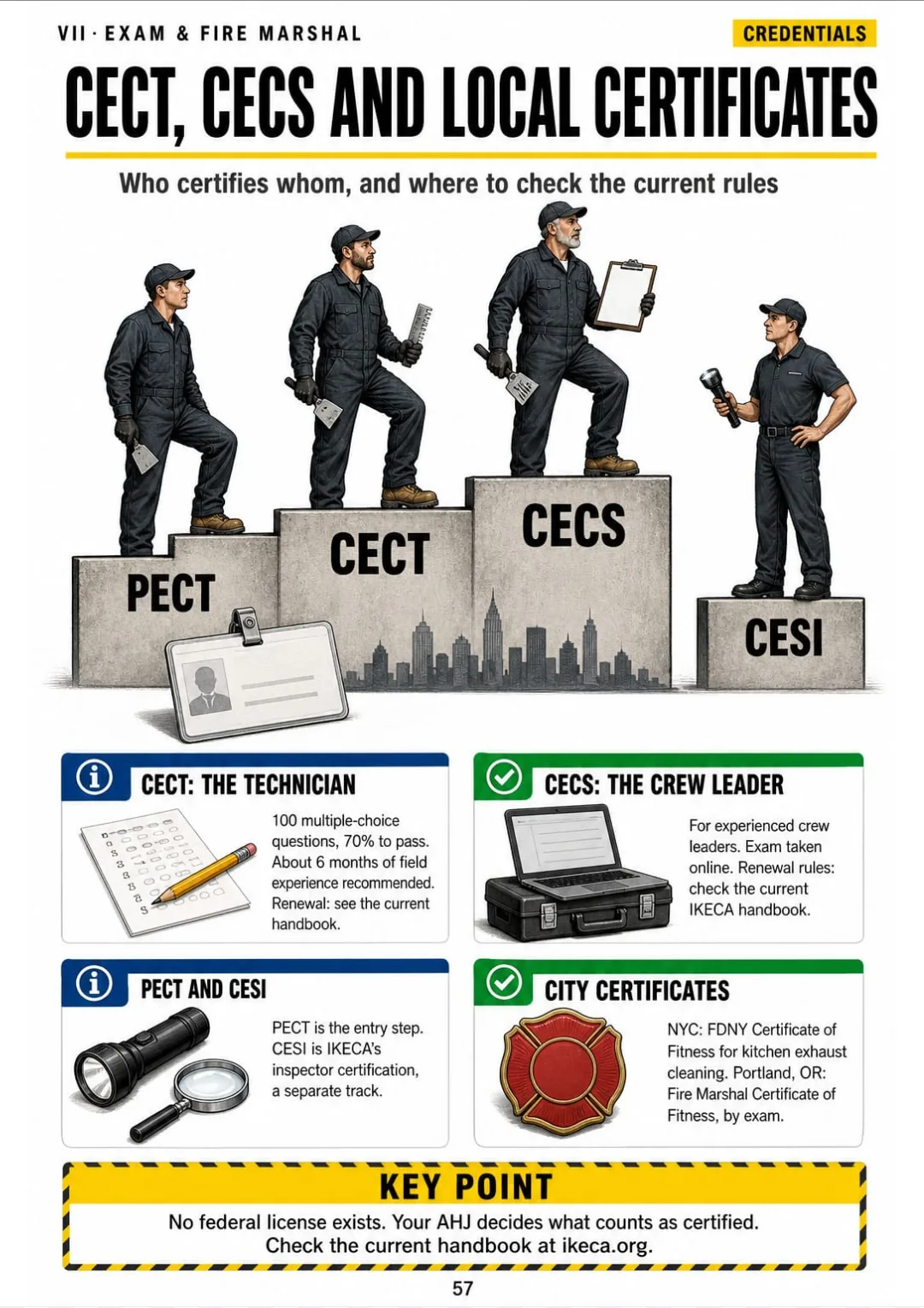
CECT: 100 questions, 70% to pass, 10 CE hours every 2 years. This book is independent of IKECA and NFPA.
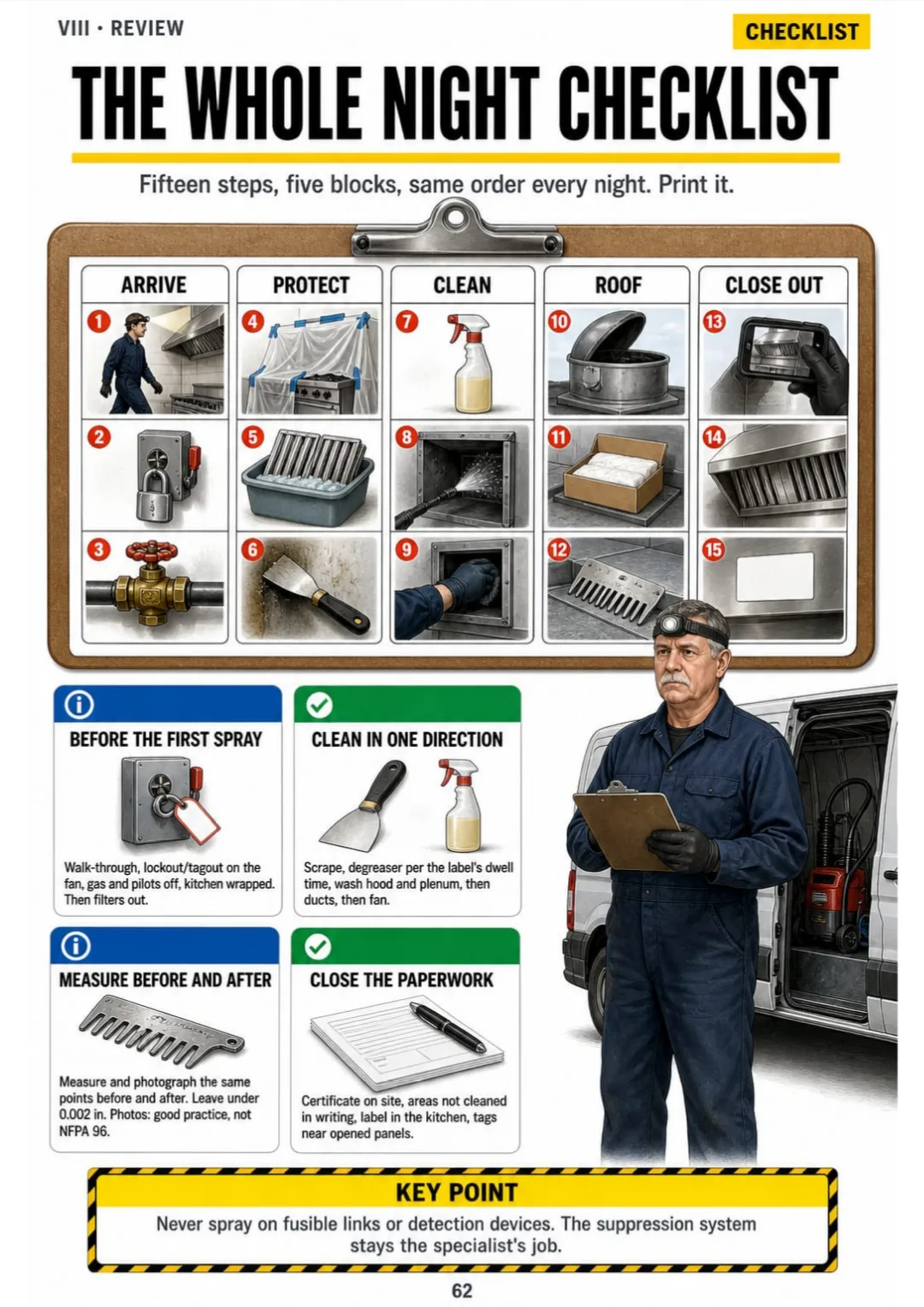
15 steps in 5 blocks: arrive, protect, clean, roof, close out.

Swipe to see more →

These are real pages from the book. The table of contents is the full one: 8 parts and 62 topics.

The Problem Isn't You. It's How It Was Explained to You.

It's 2 a.m. in a diner kitchen and the manager asks: how often does this system have to be inspected? You know a burger grill and a church kitchen aren't the same. But the exact answer won't come.

Your manual covers it in a block of “shall” and “such as,” with the cooking types buried inside a table. You read it, nodded, and by morning it was gone.

Solid fuel monthly · high volume quarterly · moderate semiannually · low annually (NFPA 96-2024, Table 12.4).

In this book, that same schedule is one page: four kitchens drawn side by side. Solid fuel monthly, high volume quarterly, moderate semiannually, low annually. Each bucket has the kitchen that fits it.

The same goes for filter height, clearances to combustibles, lockout/tagout, the depth gauge comb and the service sticker: each one has its own page.

Next time the manager asks, you look at the cooking line, pick the bucket and answer. No digging back through the standard.

COMPARE FOR YOURSELF

The Same Topic, Two Ways to Study It

THIS
  • The manual: line after line
  • Filter heights explained only in words
  • You show up to the exam unsure
The vertical distance between the lower edge of a grease removal device and the cooking surface shall be not less than 18 in. (457 mm). Where grease removal devices are used with charcoal or charcoal-type broilers, including gas or electrically heated charbroilers, a minimum vertical distance of 4 ft (1.22 m) shall be maintained. For cooking equipment without exposed flame, and where flue gases bypass the grease removal devices, the minimum vertical distance shall be permitted to be reduced to not less than 6 in. (152 mm).
FOR THIS
  • Filter height in one drawing
  • 18 in, 4 ft and 6 in in one box
  • You see it and you get it
Drip tray under the filters drains to an enclosed metal container of 1 gal (3.8 L) or less.
CONTENTS

Take a Look at the 8 Parts and 62 Topics

The system as one path, what NFPA 96 asks for, safety before the first spray, the cleaning method, measuring, reporting, the exam and the fire marshal, and a final review: 66 pages, all illustrated.

IThe System as One Path · pp. 5-16
  1. One Path: From Hood to Roof Fan
  2. Type I vs. Type II Hoods
  3. Baffle Filters: The First Barrier
  4. Filter Height Above the Cooking Surface
  5. Grease Troughs and Cups
  6. The Plenum: Behind the Filters
  7. The Grease Duct
  8. Duct Slope: Where the Grease Runs
  9. Access Panels: The Doors of the Duct
  10. Exhaust Fans: Upblast, Utility Set, Inline
  11. Make-Up Air: Why the Kitchen Breathes
  12. The Fire Suppression System, Piece by Piece
IIWhat NFPA 96 Asks For · pp. 17-25
  1. Who's Who: NFPA 96, IKECA, AHJ
  2. Inspection Schedule by Cooking Volume
  3. Which Bucket Is This Kitchen?
  4. Inspect vs. Clean: Not the Same Word
  5. Clearances to Combustibles
  6. Where the Roof Fan Must Sit
  7. Suppression Service Is Not Your Job
  8. Pull Station and Class K Extinguisher
  9. Which Edition Applies Here?
IIISafety Before the First Spray · pp. 26-34
  1. The Walk-Through Before the Job
  2. Lockout/Tagout: Fan and Appliances
  3. Gas and Pilot Lights
  4. Protect the Detection Line
  5. Ladders: 3 Feet and 4 to 1
  6. Working on the Roof at Night
  7. Chemicals: SDS, pH and PPE
  8. Hot Water, Pressure and Electricity
  9. When a Duct Is a Confined Space
IVThe Cleaning Method, Same Order Every Night · pp. 35-44
  1. The 10 Steps at a Glance
  2. Wrap the Kitchen
  3. Filters Out and Soaking
  4. Scrape Before You Spray
  5. Degreaser and Dwell Time
  6. Pressure Wash Hood and Plenum
  7. Ducts Through the Access Panels
  8. The Fan: Open, Clean, Look
  9. Rooftop Grease and Runoff
  10. Put It Back the Way It Works
VMeasure and Judge · pp. 45-50
  1. The Depth Gauge Comb
  2. The Numbers: 0.078 in and 1/8 in
  3. Where to Measure
  4. What 'Bare Metal' Means
  5. Inaccessible Areas
  6. Before-and-After Photos
VIReport It and Tag It · pp. 51-56
  1. What the Certificate Must Say
  2. Write Down the Areas Not Cleaned
  3. Deficiencies: Report, Don't Hide
  4. The Sticker on the Hood
  5. Who Gets the Report
  6. Talking to the Manager at 5 a.m.
VIIThe Exam and the Fire Marshal · pp. 57-61
  1. CECT, CECS and State Certificates
  2. Ten Questions the Fire Marshal Asks
  3. Numbers to Know Cold
  4. Reading an Exam-Style Question
  5. Words That Get Mixed Up
VIIIReview: The Night on One Page · pp. 62-66
  1. The Whole Night Checklist
  2. Common Mistakes on the Roof
  3. Common Mistakes in the Kitchen
  4. Quick Reference: The System Map Again
  5. How to Use This Book Before the Exam

One Page, One Topic, All Clear

Think of it this way:

It's 3 a.m., the fan is locked out and you're staring at a duct coated in grease. Clean it now, or write it up?

In the book you open the page on the numbers: the depth gauge comb drawn against the duct wall, 0.078 in (2000 µm) to clean, 1/8 in (3175 µm) in the fan housing.

Upblast fan: hinge, flexible cable and retainer; clean wheel and housing, check belt and drain.

Same with filter height, the inspection schedule, lockout/tagout, the upblast fan and the service sticker: each one on its own page.

Kitchen Exhaust Cleaning Illustrated is 8 parts and 62 topics, all drawn, with the fire marshal's questions, the numbers to know cold and a whole-night checklist at the end.

What you see drawn, you don't have to memorize.

What's Inside Kitchen Exhaust Cleaning Illustrated:

Ipp. 5-16

The System as One Path

You see the whole system as one path, hood to roof fan, so every name has its place: Type I and Type II hoods, baffle filters, filter height, troughs, plenum, grease duct, slope, access panels, fans, make-up air and suppression.

IIpp. 17-25

What NFPA 96 Asks For

Who's who (NFPA 96, IKECA, AHJ), the inspection schedule by cooking volume, inspect vs. clean, clearances, roof fan placement, the pull station and the Class K extinguisher.

IIIpp. 26-34

Safety Before the First Spray

The walk-through, lockout/tagout, gas and pilot lights, the detection line, ladders, the roof at night, chemicals and PPE, hot water and confined spaces.

IVpp. 35-44

The Cleaning Method, Same Order Every Night

The 10 steps in order: wrap the kitchen, filters, scraping, degreaser and dwell time, pressure washing, ducts, the fan, rooftop runoff and putting it back.

Vpp. 45-50

Measure and Judge

The depth gauge comb, 0.078 in and 1/8 in, where to measure, bare metal, inaccessible areas and before-and-after photos.

VIpp. 51-56

Report It and Tag It

What the certificate must say, areas not cleaned, deficiencies, the sticker on the hood, who gets the report and the 5 a.m. talk with the manager.

VIIpp. 57-61

The Exam and the Fire Marshal

CECT, CECS and state certificates, ten questions the fire marshal asks, the numbers to know cold, exam-style questions and words that get mixed up.

VIIIpp. 62-66

Review: The Night on One Page

The whole-night checklist, common mistakes on the roof and in the kitchen, the system map again and how to use the book before the exam.

At the end of the book: Ten fire marshal questions, the numbers to know cold and the whole night on one checklist.
Plus: 2 Free Books

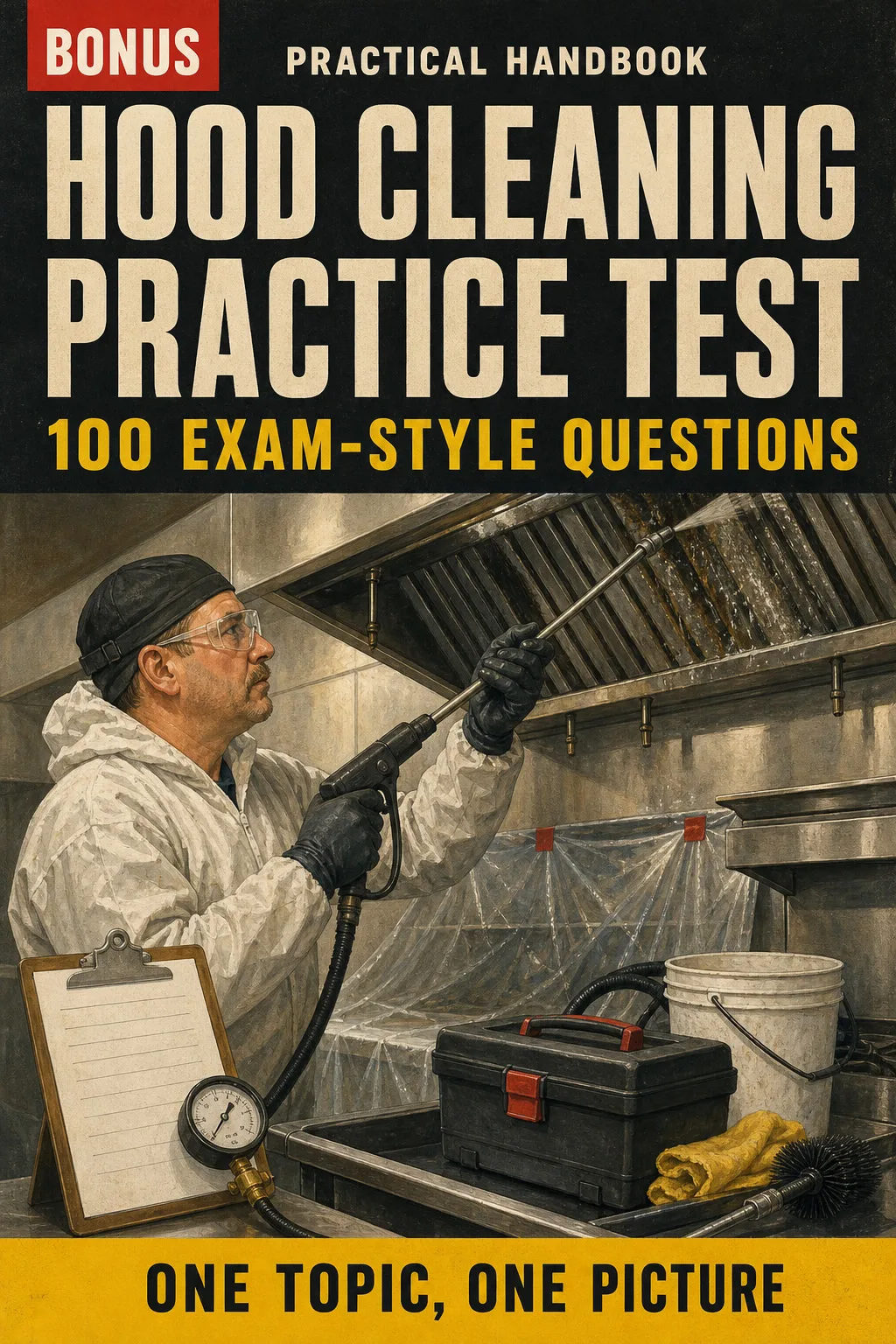
Hood Cleaning Practice Test: 100 Exam-Style Questions

BONUS 1: «Hood Cleaning Practice Test: 100 Exam-Style Questions»

Value on its own: US$ 17.90

Answer 100 exam-style questions and check each answer against the page that explains it, so you know exactly what to review.

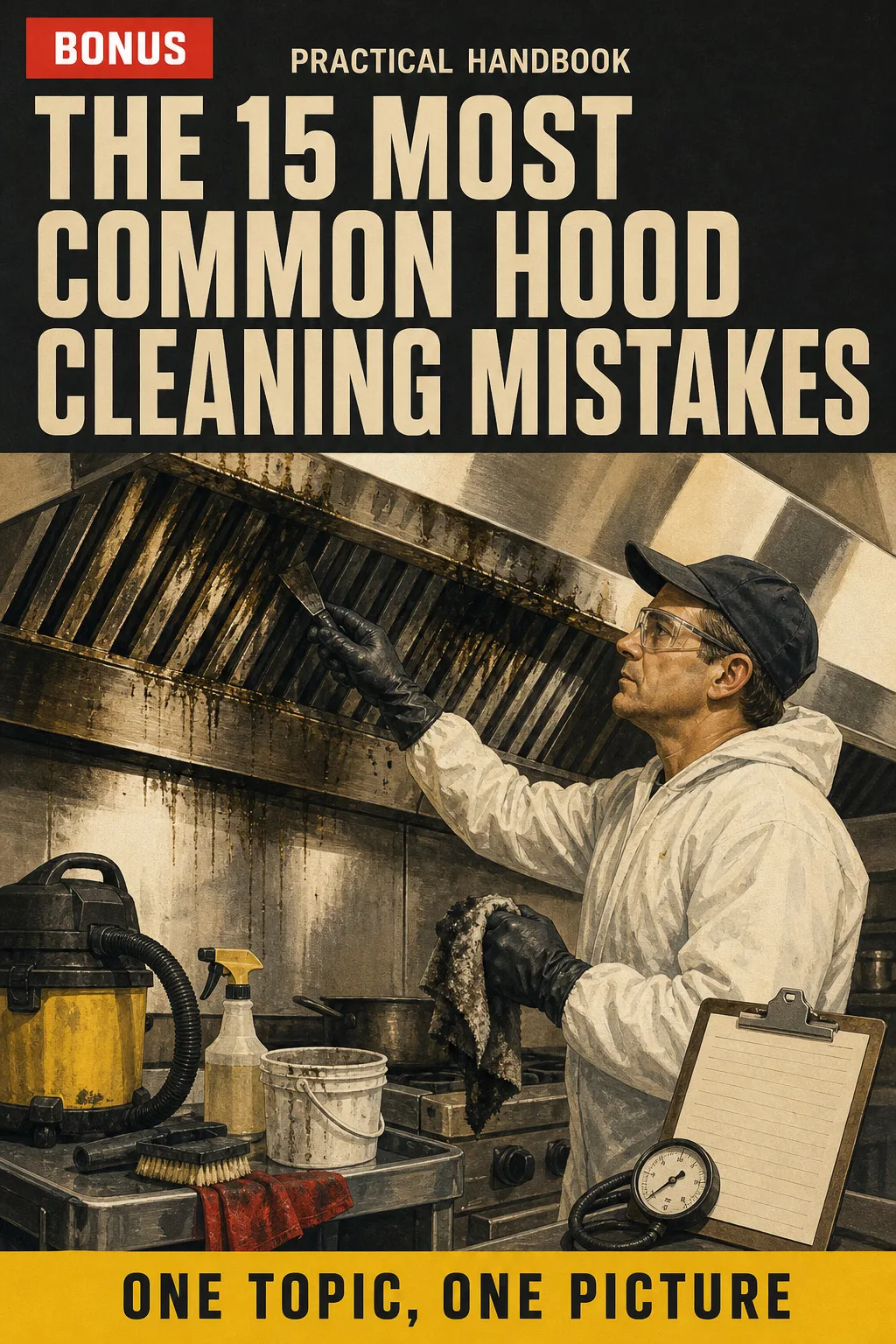
The 15 Most Common Hood Cleaning Mistakes

BONUS 2: «The 15 Most Common Hood Cleaning Mistakes»

Value on its own: US$ 14.90

See the 15 most common mistakes drawn side by side, before and after, so you catch them on the roof and on the test.

Kitchen Exhaust Cleaning Illustrated with 2 Free Books

  • Kitchen Exhaust Cleaning Illustrated: 66 illustrated pagesUS$ 63
  • BONUS 1: Hood Cleaning Practice Test: 100 Exam-Style QuestionsUS$ 17.90
  • BONUS 2: The 15 Most Common Hood Cleaning MistakesUS$ 14.90
  • High-resolution PDF to printIncluded
Total value US$ 95.80
YOUR PRICE:
US$ 27
You save US$ 68.80
YES, I WANT KITCHEN EXHAUST CLEANING ILLUSTRATED FOR US$ 27

📄 This is a digital PDF book sent to your email: nothing is printed or shipped.

Secure purchaseEncrypted payment30-day guarantee

PDF by email: We email you Kitchen Exhaust Cleaning Illustrated as a PDF, together with the two free books. It's a single payment: no installments, no extra charges.

Who This Book Is For

You're new to the trade

You're new to the trade

You came from construction or HVAC. The book shows you every part of the system drawn as one path, so the names stop being loose words.

Your CECT, CECS or state exam is coming up

Your CECT, CECS or state exam is coming up

The numbers, the inspection schedule and the words that get mixed up, each on its own page. You review in the same order every time.

You already run a crew

You already run a crew

A page per topic to hand to new techs, and the answers ready when the fire marshal or the manager asks.

Everything You Get Today

US$ 95.80US$ 27
YES, I WANT KITCHEN EXHAUST CLEANING ILLUSTRATED FOR US$ 27

📄 This is a digital PDF book sent to your email: nothing is printed or shipped.

30DAYS
GUARANTEE

30-Day Guarantee

Try Kitchen Exhaust Cleaning Illustrated for 30 days, bonus books included.

We refund everything if the file won't open, if the book isn't what you see here, if you were charged twice or if the email doesn't arrive. Just email us.

You pay once. No subscriptions.

Frequently Asked Questions

Is it for me if I've been cleaning hoods for years?

Yes. It doesn't teach you to hold a pressure washer. It puts what you already do in order, next to what NFPA 96 asks for, so you can name it on the exam and in front of the fire marshal.

Where does the content come from?

From NFPA 96 (2024 edition), ANSI/IKECA C10 and OSHA 29 CFR 1910 for lockout/tagout, ladders and chemicals. Your state or city may enforce an earlier edition, so every frequency and clearance is flagged for you to check against the one your AHJ has adopted. Studying for a state certificate, like the one in Massachusetts? The book covers NFPA 96 and C10, not state-specific rules, so check your state's reference list too.

Is this official material?

No. It's an independent study guide. It is not published, endorsed or approved by NFPA, IKECA or any state agency.

Do I get a certificate? Does it replace a course?

No. It's a study and review aid. It doesn't give you a certificate, a license or continuing-education credit. Hands-on training, your certification course and your local AHJ's requirements still come first.

Are the practice questions the real exam questions?

No. The 100 questions are written for this book, in exam style, and each one points to the page that explains it.

How do I get it?

The book and the 2 bonus books arrive as a PDF by email.

Do I have to pay every month?

No. It's a one-time payment.

Can I have it on paper?

Yes. Print the PDF at home or at a print shop and keep it in the truck.

How does the refund work?

You have 30 days. We refund everything if the file won't open, if the book isn't what you see on this page, if you were charged twice or if the email doesn't arrive: just email us.

Before You Close This Page

No more rereading the standard with nothing sticking.

Grease depth, filter height, inspection schedule: you see them drawn and you're set.

You walk into the exam knowing where everything is.

Drawings make studying faster.

The book is right below.

One-time payment: US$ 27 · Guarantee: 30 days · PDF by email

YES, I WANT KITCHEN EXHAUST CLEANING ILLUSTRATED FOR US$ 27

📄 This is a digital PDF book sent to your email: nothing is printed or shipped.